
Outsourcing Application Development: A Compliance-First Guide for Enterprise and Government
Quick Answer: Outsourcing application development means hiring an external team to design, build, or maintain software. For government and regulated enterprises, the key difference is that compliance, security, audit trails, and data handling requirements need to be built into the project scope and contract from the start.
By Aveosoft Editorial Team, reviewed by Aveosoft's enterprise delivery practice, which builds compliance and audit-ready systems for government and regulated-industry clients.
Table of Contents
- Why Outsourcing Application Development Works Differently for Government and Regulated Industries
- Models of Application Development Outsourcing
- What Outsourced Application Development Looks Like for Regulated Industries
- How to Evaluate Software Development Outsourcing Companies
- Budgeting: What Outsourcing Application Development Actually Costs
- Key Takeaways
- Conclusion
- FAQ
Outsourcing application development means contracting an external team to design, build, or maintain software rather than hiring in-house staff for the full lifecycle. For a government department or a regulated enterprise, that decision carries weight well beyond cost: the vendor's work must survive an audit, satisfy a regulator, and hold up under a security review.
Why Outsourcing Application Development Works Differently for Government and Regulated Industries
Most outsourcing advice online treats the decision as a cost-and-speed trade-off: find a cheaper team, ship faster, iterate later. That framing fits a startup building a consumer app. It does not fit a state agency building a case management system, or a fintech firm building a transaction engine that examiners will inspect.
For government and regulated-industry buyers, the real question is compliance fit: can this outsourcing partner build a system that passes an audit, documents its decisions, and meets the data-handling rules your sector requires? A vendor focused only on delivery speed may overlook requirements such as audit trails, access controls, or data residency unless those are clearly defined as deliverables from the start.
Software development outsourcing arrangements that ignore these requirements can create rework later, when legal or compliance teams discover the system cannot produce the records an auditor needs. Building those requirements into the statement of work from the beginning helps avoid that rework.
Models of Application Development Outsourcing
Application development outsourcing is not one arrangement. Three models dominate, and each suits a different stage of a government or enterprise program.
Project-based engagement fixes scope, timeline, and price upfront. It works for a defined deliverable, like a permitting portal with known requirements, but it assumes requirements will not change, which rarely holds for compliance-driven systems.
Dedicated-team engagement places a vendor-managed team under the client's direction for an ongoing period. It suits long-running platforms, like a case management system that evolves with new regulations.
Staff augmentation adds outsourced developers directly into an internal team, under internal management. It gives the most control but requires the client to own architecture and compliance decisions.
- Project-based: fixed scope, fixed price, lower flexibility
- Dedicated team: ongoing capacity, shared management, moderate control
- Staff augmentation: embedded in-house, highest control, highest internal oversight burden
Project-based Vs. Dedicated-team Vs. Staff Augmentation
Choosing among these three comes down to how often requirements will change and how much internal oversight capacity exists. A department with a small internal IT team but a long-term platform roadmap usually fits a dedicated team better than repeated project-based contracts.
Mobile App Development Outsourcing Vs. Platform/custom Software Outsourcing
Mobile app development outsourcing differs from platform outsourcing in scope and compliance surface. A mobile app for field inspectors touches device management, offline data sync, and local storage rules, while a backend platform touches integration, data residency, and audit logging. Outsource app development scopes should separate these explicitly, since a single contract covering both without distinct acceptance criteria tends to under-specify one side.
Node Development Outsourcing and Stack-specific Engagement
Node development outsourcing is an example of stack-specific engagement, where a client needs a team fluent in a particular runtime (Node.js, in this case) for a defined service or API layer. Stack-specific contracts work well for integration layers and microservices, where the deliverable is narrow and testable, but they are a poor fit for full-platform ownership, where architecture decisions span multiple stacks.
Budget Insight: Stack-specific contracts (like node development outsourcing) are often priced and scoped more tightly than full-platform contracts, because the boundary of work is easier to define and test against.
What Outsourced Application Development Looks Like for Regulated Industries
Outsourced application development for a regulated industry means treating compliance requirements as part of the build, not as side effects of good engineering. A healthcare system may need detailed audit logs and access controls, a government department may need role-based access tied to its identity provider, and a fintech platform may need a transaction trail an examiner can reconstruct.
Compliance and Audit-ready Systems as Explicit Deliverable
Audit-ready systems get built differently from systems that add logging later. The contract should list the compliance outputs expected: immutable audit logs, access control matrices, data retention schedules, and incident response documentation. Each of those is a separate line item, not a footnote under "best practices."
Data Residency, Access Control, Audit Trail Requirements
Data residency rules determine where data can be stored and processed, and they differ by sector and jurisdiction, so a vendor's infrastructure choices need to match the client's specific obligations, not a generic default. Access control needs to be role-based and tied to the client's identity system, not the vendor's own login scheme. Audit trails need to capture who changed what and when, in a format an auditor can query without vendor assistance.
Red Flag: If a vendor cannot describe how their system exports audit logs without engineering support from their own team, that log structure was not designed for an external auditor.
Platform development and compliance requirements work best when scoped together from the start. Retrofitting access controls or audit requirements onto a platform that was not designed for them is slower and more expensive than building them in from the beginning. Aveosoft's custom application development services follow this compliance-first approach for enterprise and government clients.
How to Evaluate Software Development Outsourcing Companies
Software development outsourcing companies vary widely in how they handle compliance, and the evaluation criteria for an outsource software development company serving government or regulated clients differ from the criteria that matter for a consumer app vendor.
Vetting an Outsourcing Partner for Government and Enterprise Work
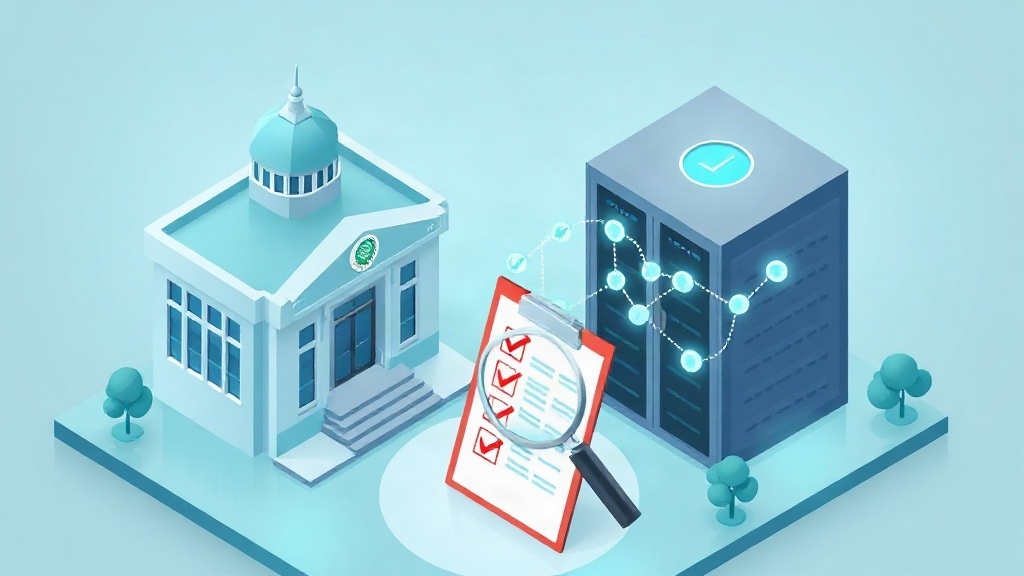
A checklist for vetting outsourcing software companies for this kind of work:
- Ask for a named example of a compliance-driven system they delivered, not a general portfolio
- Request their approach to data residency and ask how it maps to your sector's rules
- Confirm they can produce audit logs in a format your internal auditors can query directly
- Check whether their contract separates build cost from ongoing MLOps or monitoring cost
- Ask how they handle a security incident: what's the notification timeline, and who owns remediation
Buying Tip: Ask any outsourcing software company to walk through a mock audit request on a past project. How they answer, specifically or vaguely, tells you more than their marketing materials.
Red Flags in an Outsource Software Development Company Contract
A few contract patterns signal risk for a government or enterprise buyer:
- A flat quote with no breakdown between build and compliance work
- No named point of contact for security or compliance questions
- Vague language around data ownership and data deletion after contract end
- No clause describing how audit trail or logging requirements get validated at delivery
Software development outsource contracts that skip these details usually push the cost of fixing them onto the client after go-live.
Budgeting: What Outsourcing Application Development Actually Costs
Outsourcing application development costs depend on scope, compliance obligations, and integration complexity, which is why a single average figure misleads more than it helps. A system with strict data residency and audit requirements costs more to build correctly than a comparable system without those constraints, because compliance work (logging, access control, documentation) is additional engineering effort, not a free byproduct.
Cost Variables: Scope, Compliance, Integration Complexity
Three variables drive most of the cost spread: how many systems the new application must integrate with, how strict the compliance obligations are, and how much of the work is net-new versus modernization of an existing system. A department replacing a legacy case management system with strict audit requirements will pay more per feature than a greenfield internal tool with no regulatory scope.
Separate Build Cost vs Ongoing MLOps/monitoring Cost
The initial build is only part of the total cost. Maintenance, monitoring, infrastructure, security updates, and ongoing support should be budgeted separately. Ask vendors to show which costs are included in the initial project and which will continue after launch.
Avoid Flat-quote Comparisons
Comparing vendor quotes only works when they cover the same scope. Look for separate costs for development, compliance deliverables, integrations, and ongoing operations. A lower flat quote may simply leave important work out of scope.
| Outsourcing Model | Control | Speed | Compliance Fit |
|---|---|---|---|
| Project-based | Low to moderate | Fast for fixed scope | Weak unless compliance is itemized upfront |
| Dedicated team | Moderate | Steady, ongoing | Strong for long-running regulated systems |
| Staff augmentation | High | Depends on internal management | Strong, since client owns compliance decisions |
Key Takeaways
- Compliance fit, not the lowest bid, should drive the outsourcing decision for government and regulated-industry systems.
- Project-based, dedicated-team, and staff augmentation models trade off control, speed, and internal oversight differently.
- Audit-ready systems need audit logs, access controls, and data residency requirements named as explicit contract deliverables.
- Vetting an outsourcing partner means asking for specific compliance examples, not general portfolios.
- Build costs and ongoing operations costs should be budgeted separately.
Conclusion
Outsourcing application development can work for a government department or a regulated enterprise, but only when the contract treats compliance and audit-readiness as a deliverable from the first scoping conversation, not a fix applied after a failed review. The decision that matters is compliance-fit, not the lowest bid. Explore Aveosoft's AI and software engineering services to see how a compliance-first build is scoped from day one.